Wind powerfor net-zeroCanada.
A quiet vertical-axis wind turbine built from the regular icosahedron. One edge length sets every dimension, for net-zero communities, rooftops and schools.
Why Canada
Canada is building communities that make their own clean energy. We want small wind to be part of that: a turbine simple enough to understand, build and repair close to where it is used.
Écoquartier Primaterra 500
A planned low-carbon neighbourhood in Québec by Primaterra, built around circular economy, local food and renewable energy. GeoWind turbines are proposed for the rooftops, next to solar panels.
Status: in planning- Homes
- 230
- Residents
- 500
- Buildings
- 3
- Each rooftopSolar panels and a small GeoWind wind turbine
- UniBioCell 500One 20-ft container in the back courtyard
- Shared gardensLocal food production with VGCube
- GoalsLower emissions and a resilient community
One geometry, every size.
The model number is the icosahedron's edge length in millimetres. Ten faces become wings, five around each pole, and the edge midpoints form a regular decagon at the equator, radius (φ/2)·ℓ. Pick a model to see it next to a person.
Already turning in classrooms and on rooftops.
Schools and makers in Korea, Vietnam, Colombia, Mexico and the United States use GeoWind to make power and to learn how wind works.
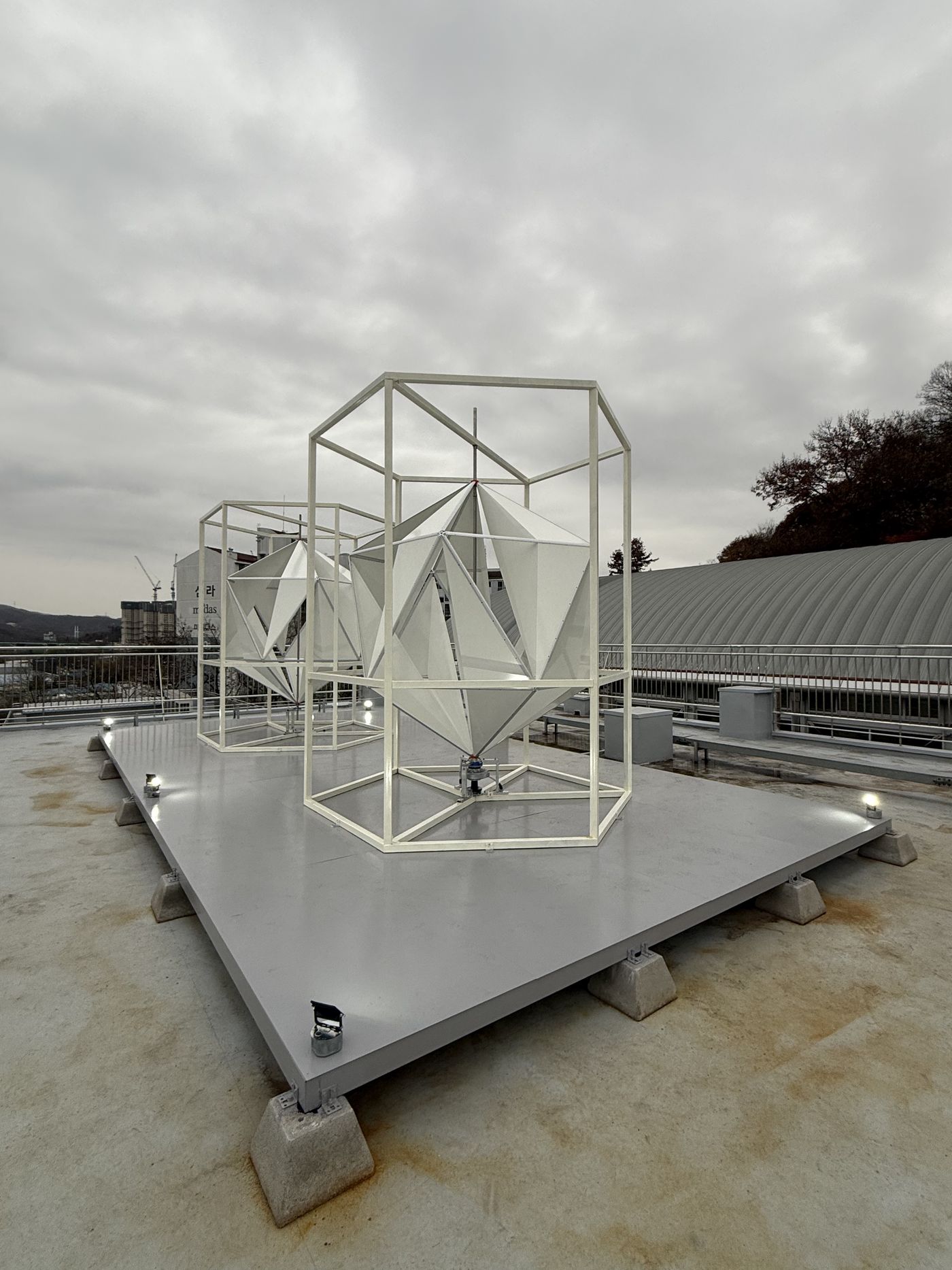 The finished installation on an overcast day
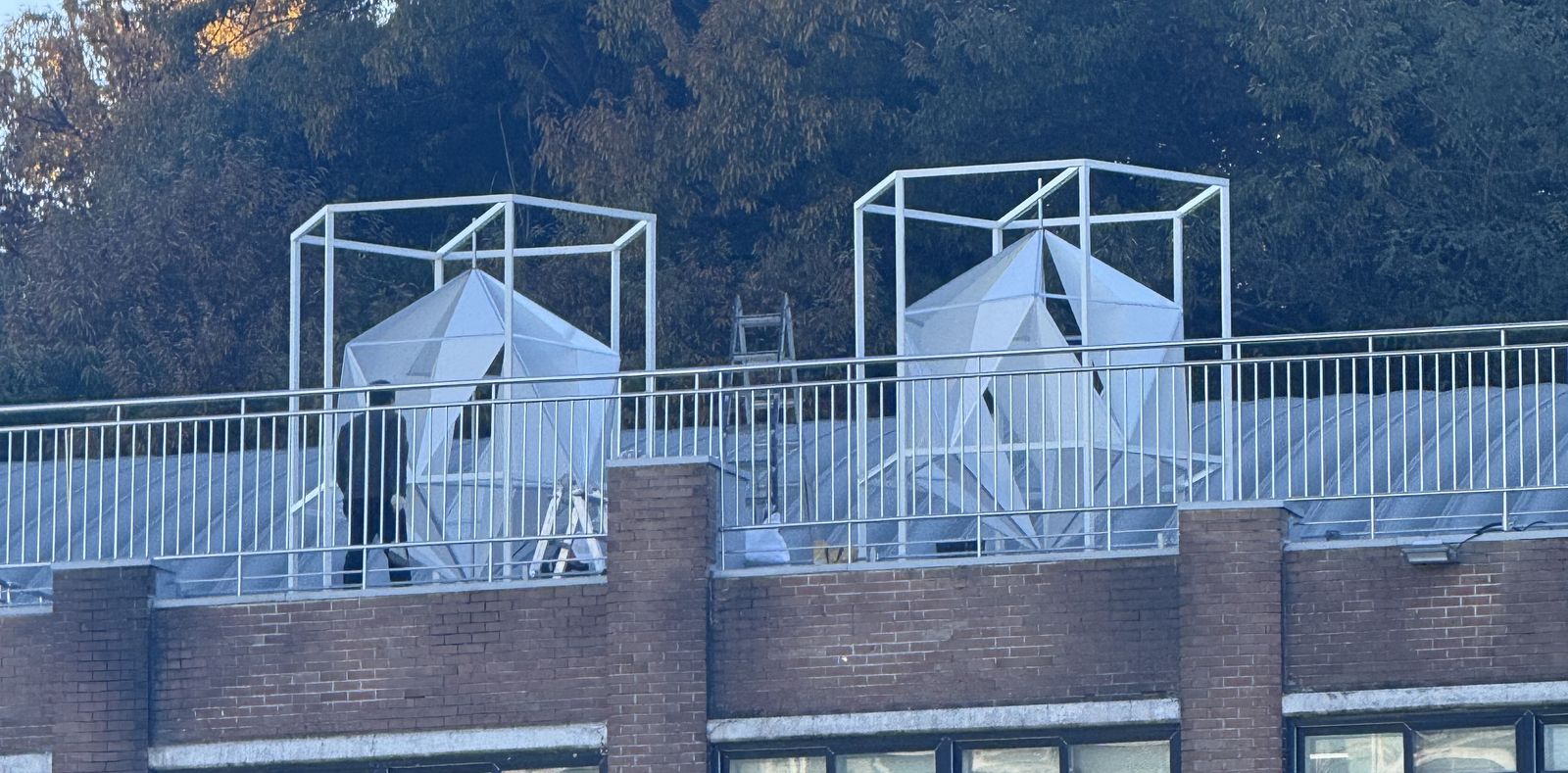 On a high school roof in Korea, seen from the schoolyard
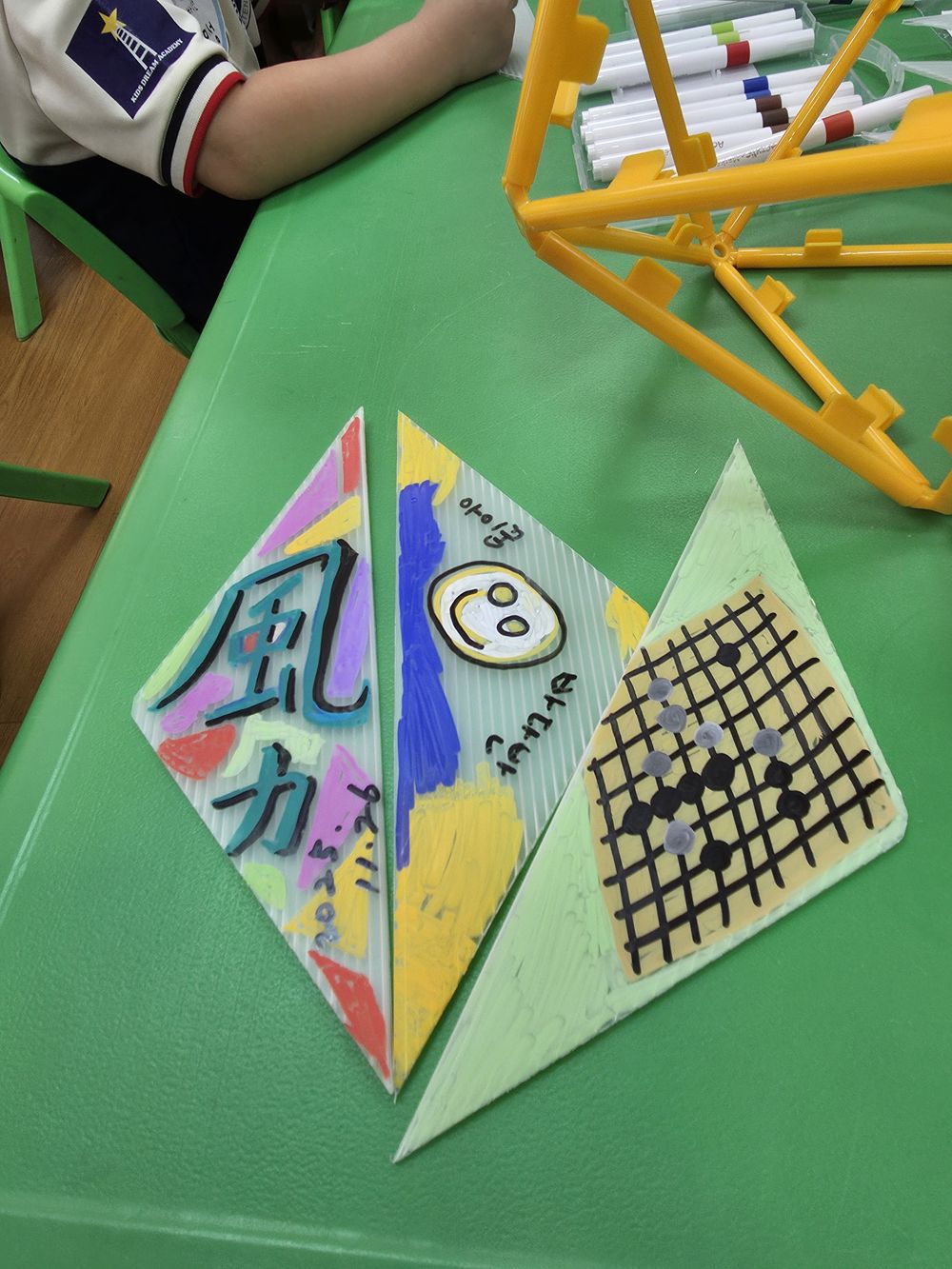 Kindergarten students paint their own wings, Ho Chi Minh City
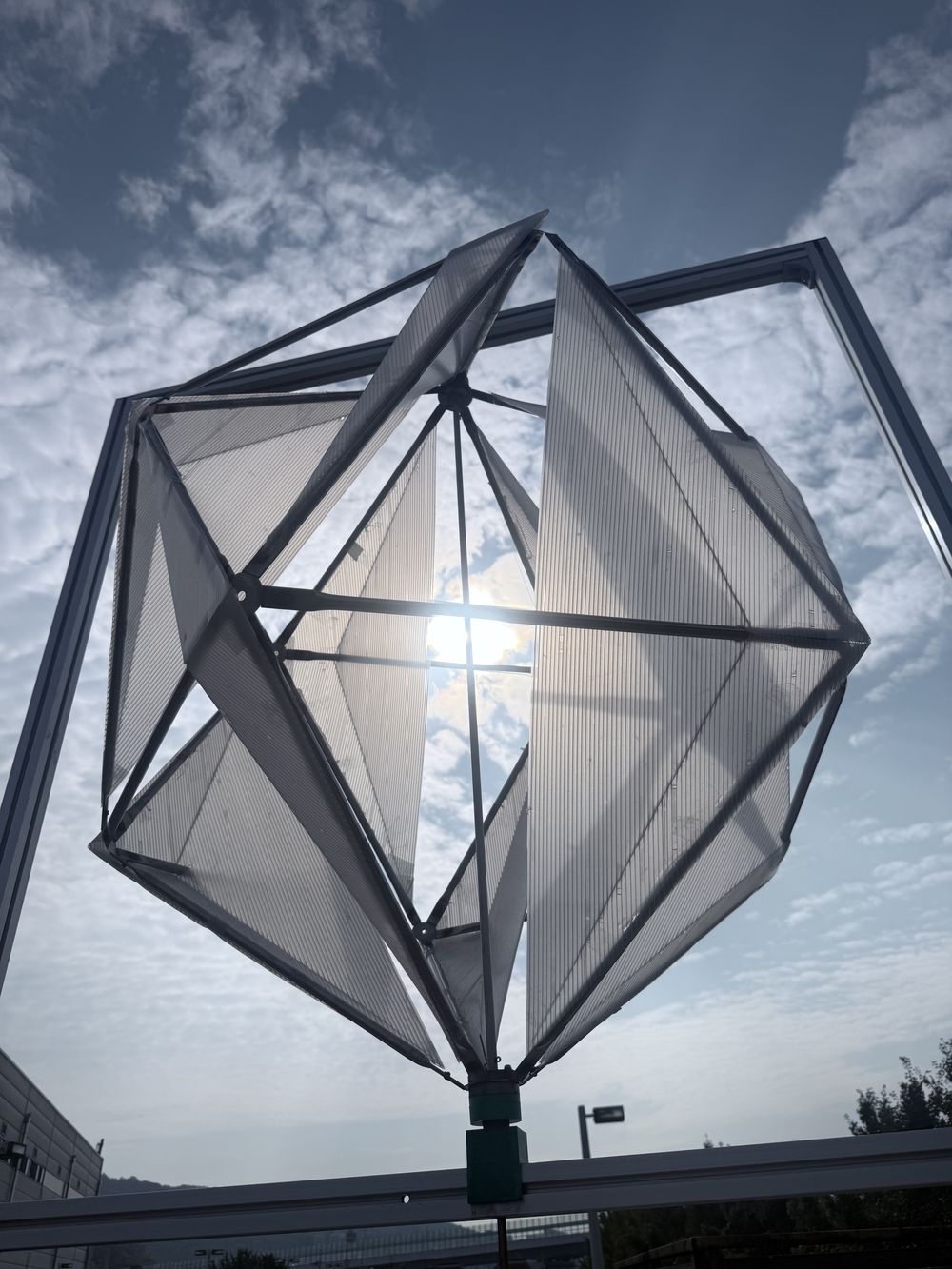 Wing detail
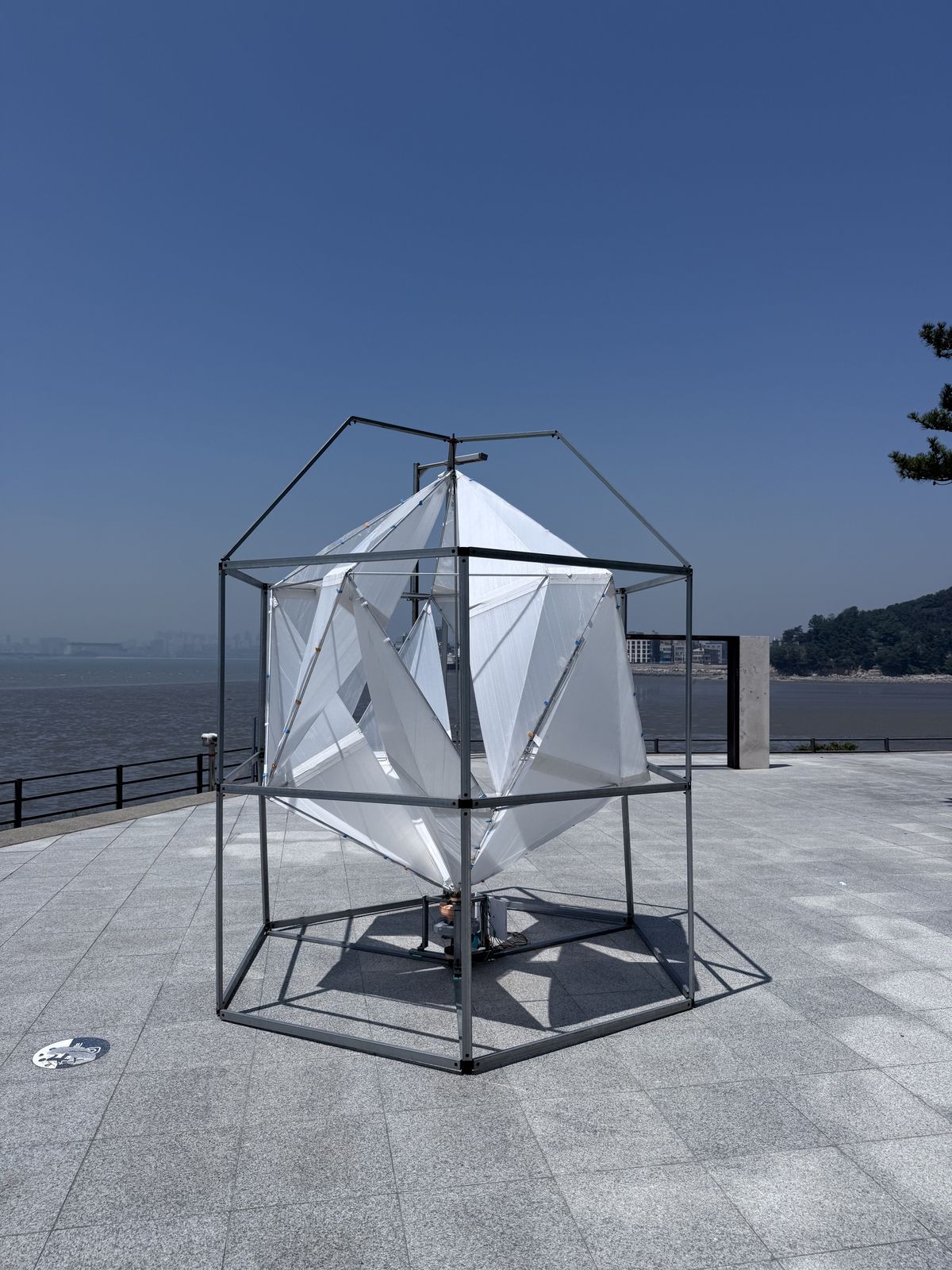 Seaside field test at Oido, Korea
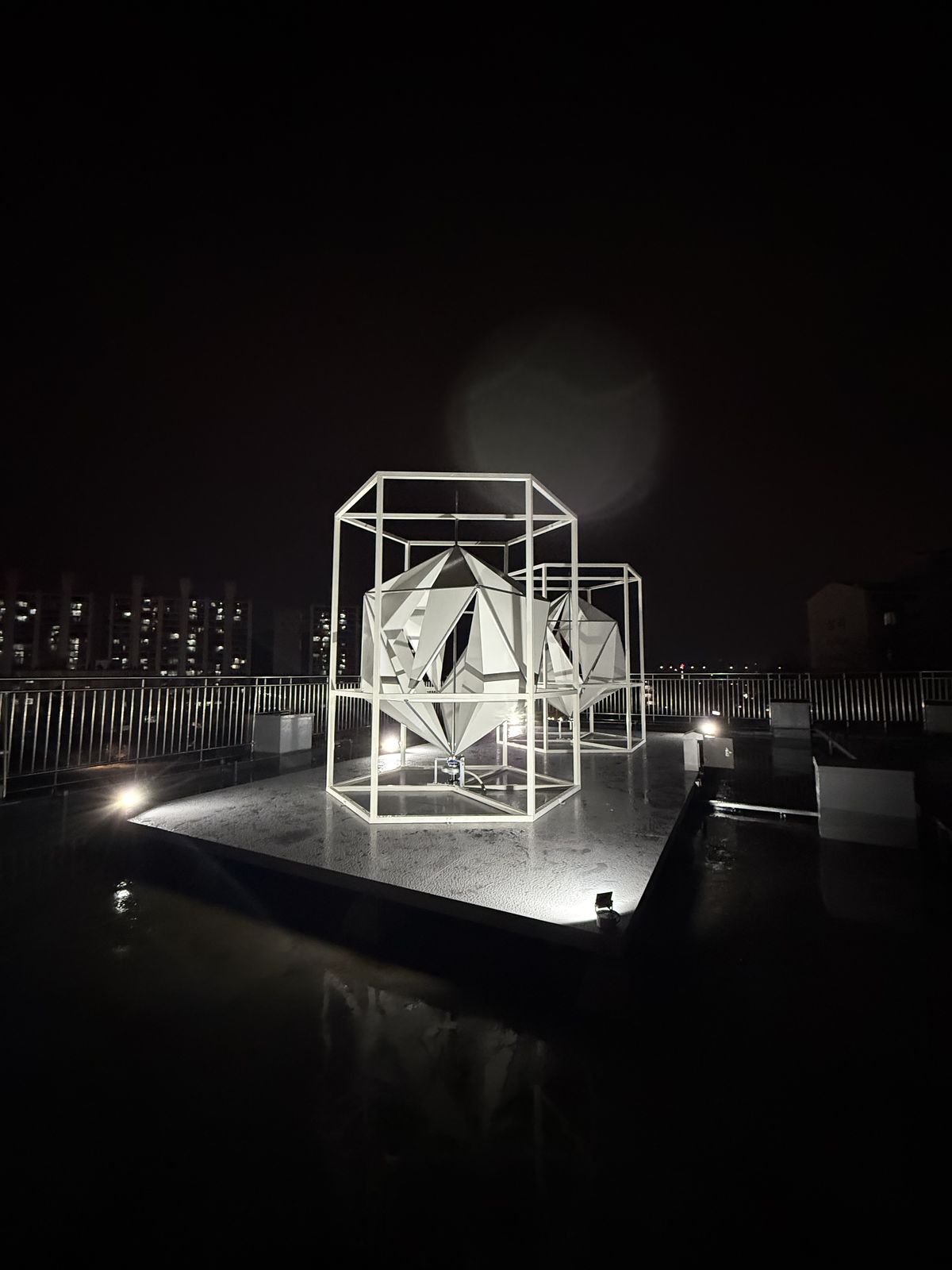 Lit up after dark
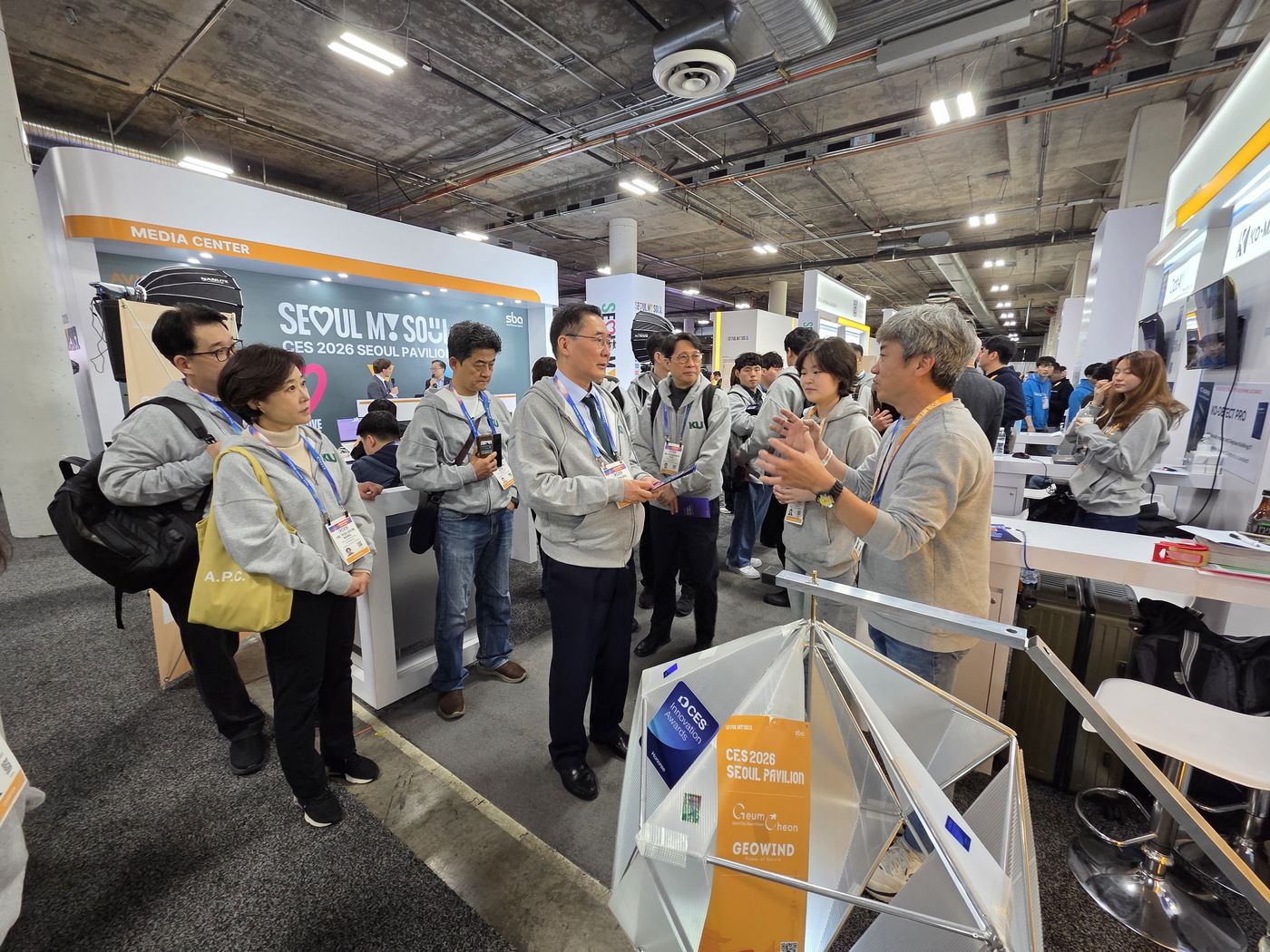 Visitors at our booth, CES 2026, Las Vegas

Founder
Young June Jeon
A Canadian physicist who spent years doing hands-on energy work in Canada before developing the GeoWind geometry.
- Certified Energy Inspector (NRCan)
- Gas Technician G2 (TSSA, Ontario)
- B.Sc. Physics, Incheon National University
Let's build something worth the wind.
Canadian developers, municipalities, schools and makers: send us a note about your site. We reply within 24 hours.